
COMMENTS ON THE ART MARKET
UPCOMING EXHIBITION
WE WALK THIS ROAD ALONE
In Partnership with the Art Renewal Center
This May, Rehs Contemporary presents a new art exhibition that challenges artists to examine the many dimensions of solitude. Rather than presenting solitude as a single emotional state, the works on view reveal it as an experience that can be restorative and transformative.
In an increasingly interconnected world, time spent alone canseem rare or even undesirable. Yet psychological research suggests the opposite: periods of solitude are essential to personal development, creating space for reflection, creativity, and renewed perspective.
Through the lens of contemporary art, "We Walk This Road Alone" encourages viewers to take a more expansive, empathetic view of solitude, challenging us to move beyond simplistic notions of loneliness and embrace the nuanced, multifaceted nature of time spent alone.
Opening Reception
Thursday, May 15, 2026 | 4:00 PM - 8:00 PM
Day Opening
Friday, May 16, 2026 | 12:00 PM - 5:00 PM
Exhibition Dates
May 15 - June 19, 2026
INTRODUCING THE ARTISTS
ADAM BAUDER
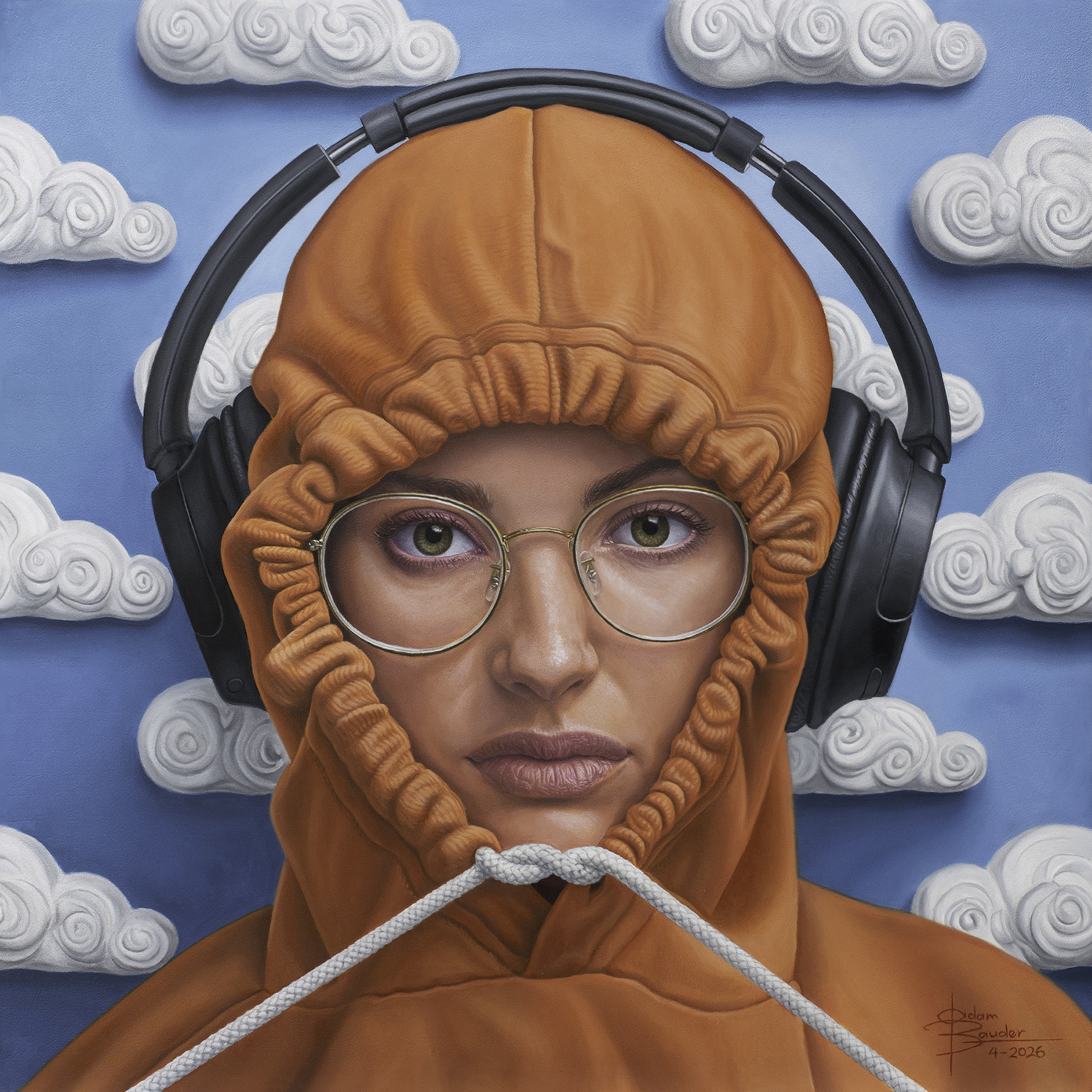
Adam Bauder began his artistic career as a graphic designer and early web designer. Introduced to photorealism in high school through the work of Chuck Close, Richard Estes, and Ralph Goings, Bauder developed a deep appreciation for precision and technical mastery, an influence that continues to shape his practice today.
Working primarily in portraiture and the human figure, Bauder's work bridges the legacy of early photorealism with a contemporary, hyperrealist sensibility.
LISA FALKENSTERN
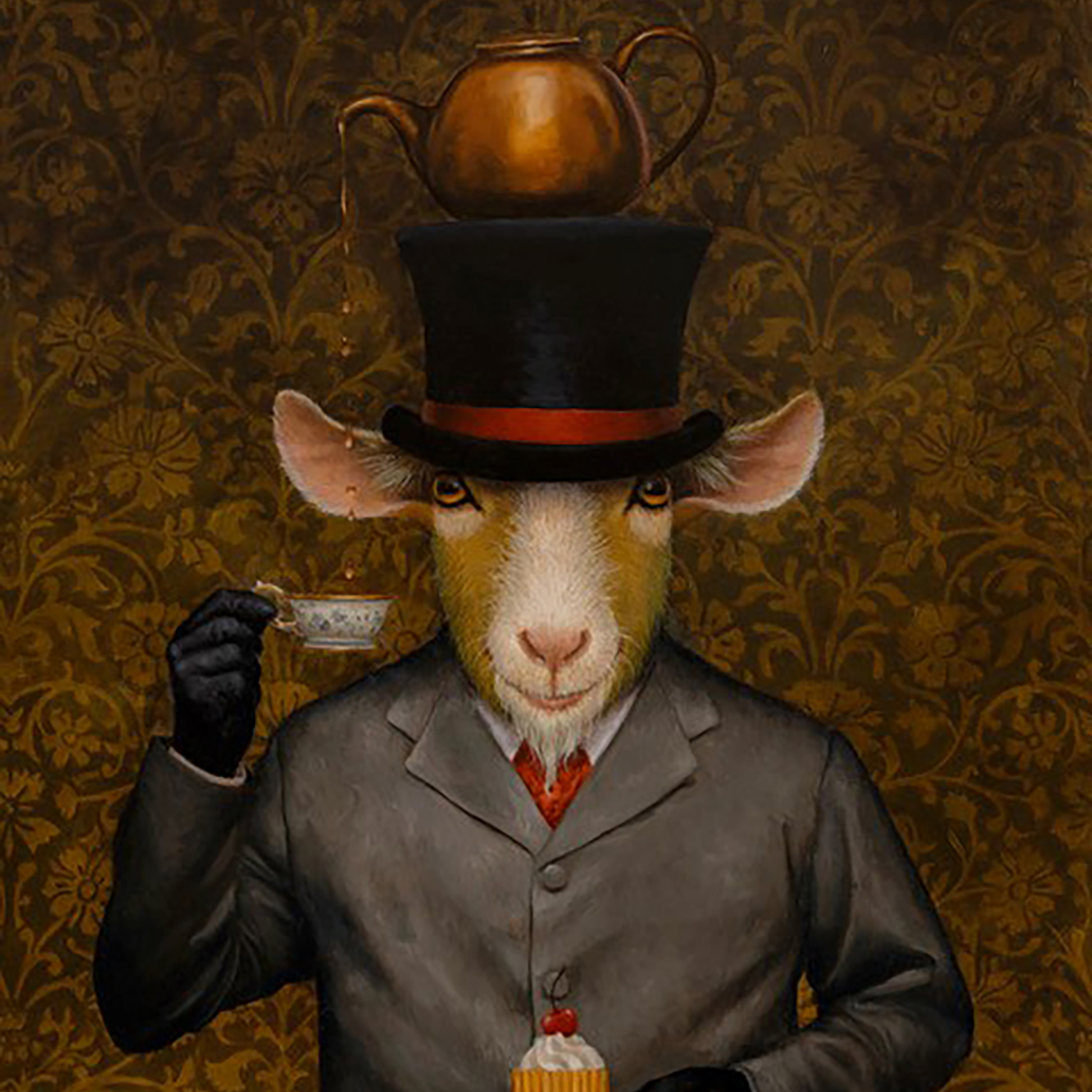
Lisa Falkenstern is an illustrator and fine artist with a career spanning more than three decades, during which she has created nearly one thousand book covers for major publishers.
Her work has earned widespread recognition, including a Gold Medal from the New York Society of Illustrators, along with honors from the Los Angeles Society of Illustrators and Creativity International. Her illustrations have appeared in leading annuals such as Communication Arts and Spectrum, and her fine art is held in the permanent collections of the New York Society of Illustrators and the New York State Museum.
Working across oil, acrylic, and egg tempera, Falkenstern creates imaginative, magic realist paintings.
NANCI FRANCE-VAZ
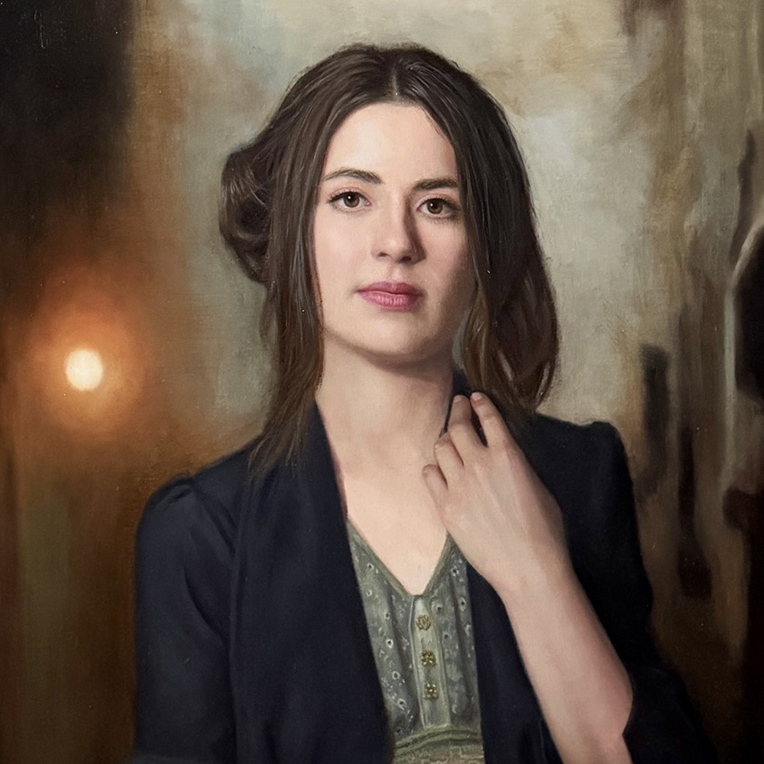
Nanci France-Vaz is a contemporary realist painter and an Art Renewal Center Living Master—an honor recognizing exceptional technical skill in representational art. Six of her paintings are held in the permanent collection of the Art Renewal Center Museum, underscoring her standing among today’s leading realist artists.
Born in Brooklyn, New York, she studied at the School of Visual Arts, where she earned a BFA with a focus on animation, film, and special effects—an influence that continues to inform the cinematic quality of her work.
Working primarily in figurative and portrait painting, France-Vaz draws on classical traditions while maintaining a distinctly contemporary voice. Her work is known for its controlled use of light, subtle color relationships, and psychological depth, often creating quiet, contemplative moments that resonate with viewers.
MARK HARRISON

Mark Harrison is a contemporary painter whose work centers on light and atmosphere as the primary drivers of narrative.
Originally from the UK, Harrison began his career in illustration, producing book covers and commercial work across advertising and the music industry. That background continues to inform his clear, direct compositions, while his transition into fine art has introduced a more painterly, expressive approach.
Though his early work leaned toward science fiction and fantasy, his current focus is on landscape and cityscape, often drawing from American settings. Harrison has exhibited widely in the UK, Bali, and the United States, and has been a regular exhibitor with the Art Renewal Center since the 11th Salon (2014–2015).
PAULA HOLTZCLAW
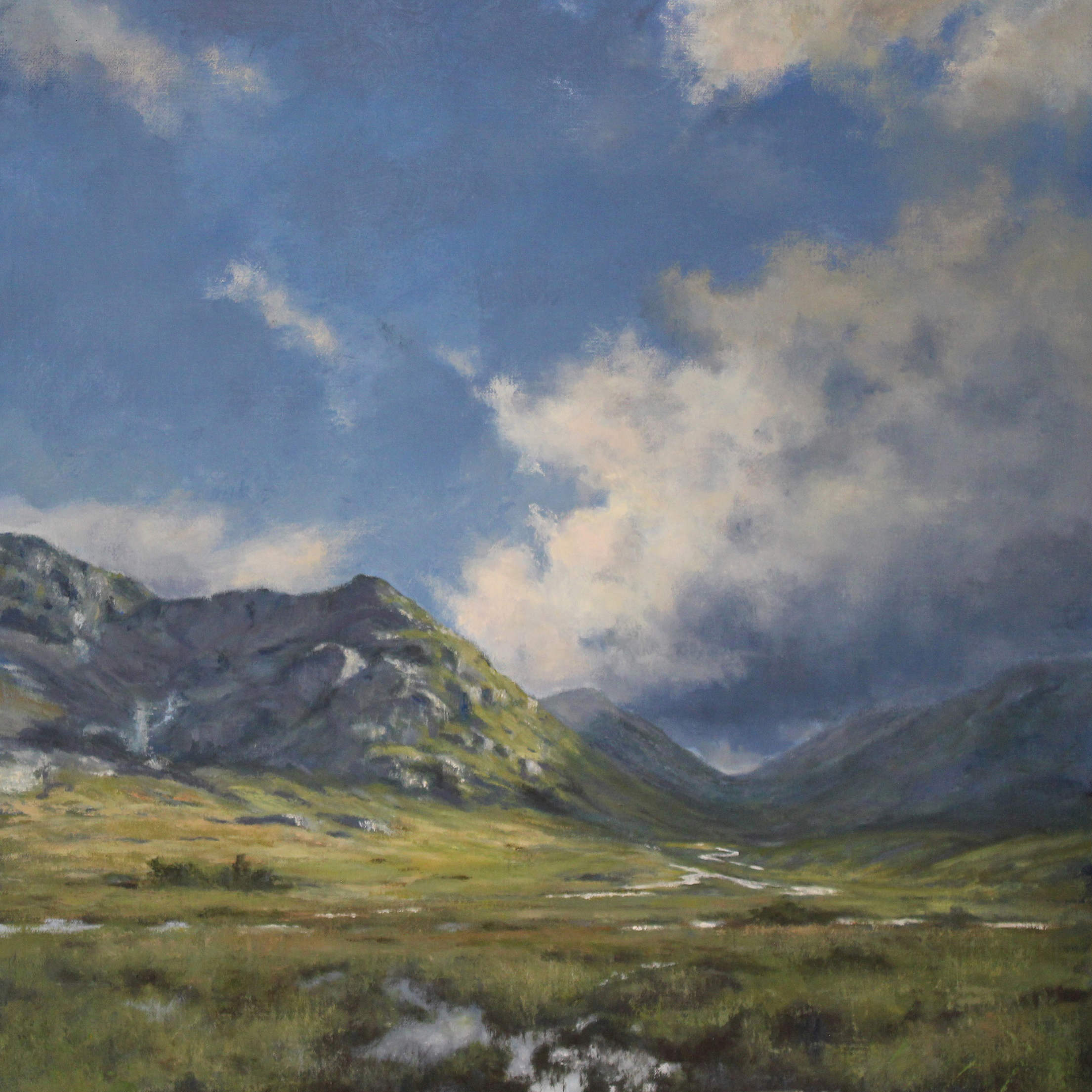
Paula Holtzclaw is an American contemporary painter known for her luminous landscapes and evocative depictions of nature. Her work reflects a deep connection to the natural world, capturing atmosphere, light, and mood with a refined sense of color and composition. Influenced by the Old Masters, her still lifes blend classical realism with a more impressionistic touch.
After a long career in ophthalmology, Holtzclaw transitioned to painting full-time in 2002, building a national reputation through exhibitions, awards, and museum placements. Her paintings have been shown across the United States and internationally, and are held in both public and private collections.
In addition to her studio practice, she is an active member of several major art organizations and has served as a juror for regional and national exhibitions, supporting and mentoring other artists within the community.
BERTRAND MARTIN
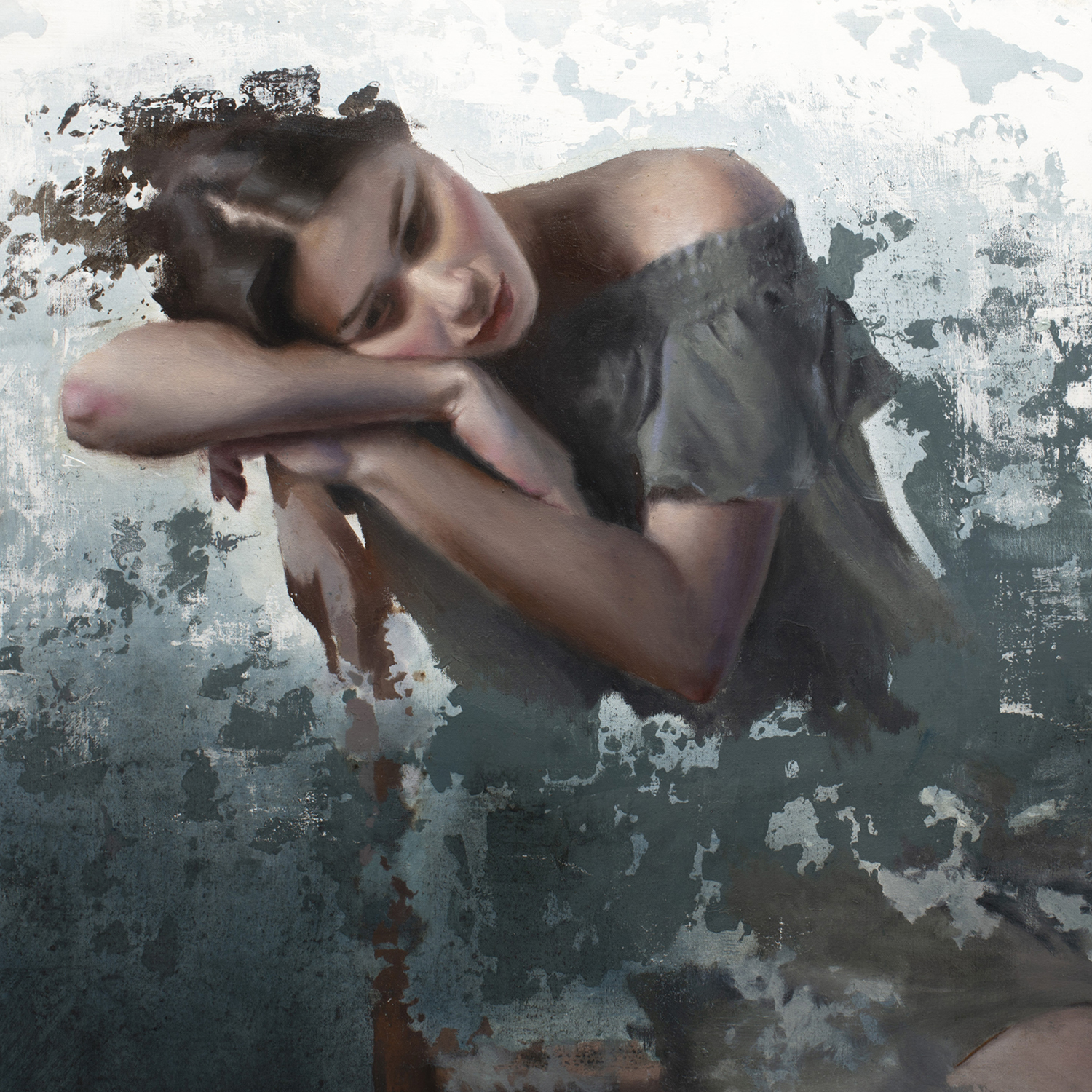
Bertrand Martin is a self-taught artist who came to painting later in life, fully developing his practice in his late 30s. After early success with watercolor, he transitioned to oil painting, studying the techniques of the Old Masters alongside contemporary figurative artists such as ZhaoMing Wu, Alex Venezia, Causey Baugh, and Daniel Sprick.
His work blends classical structure with a more modern sensibility, often exploring contrasts—beauty and tension, light and shadow, control and spontaneity. Focusing primarily on portraiture and the human figure, Martin creates compositions that emphasize emotion, presence, and individuality.
SEBASTIAN MESA
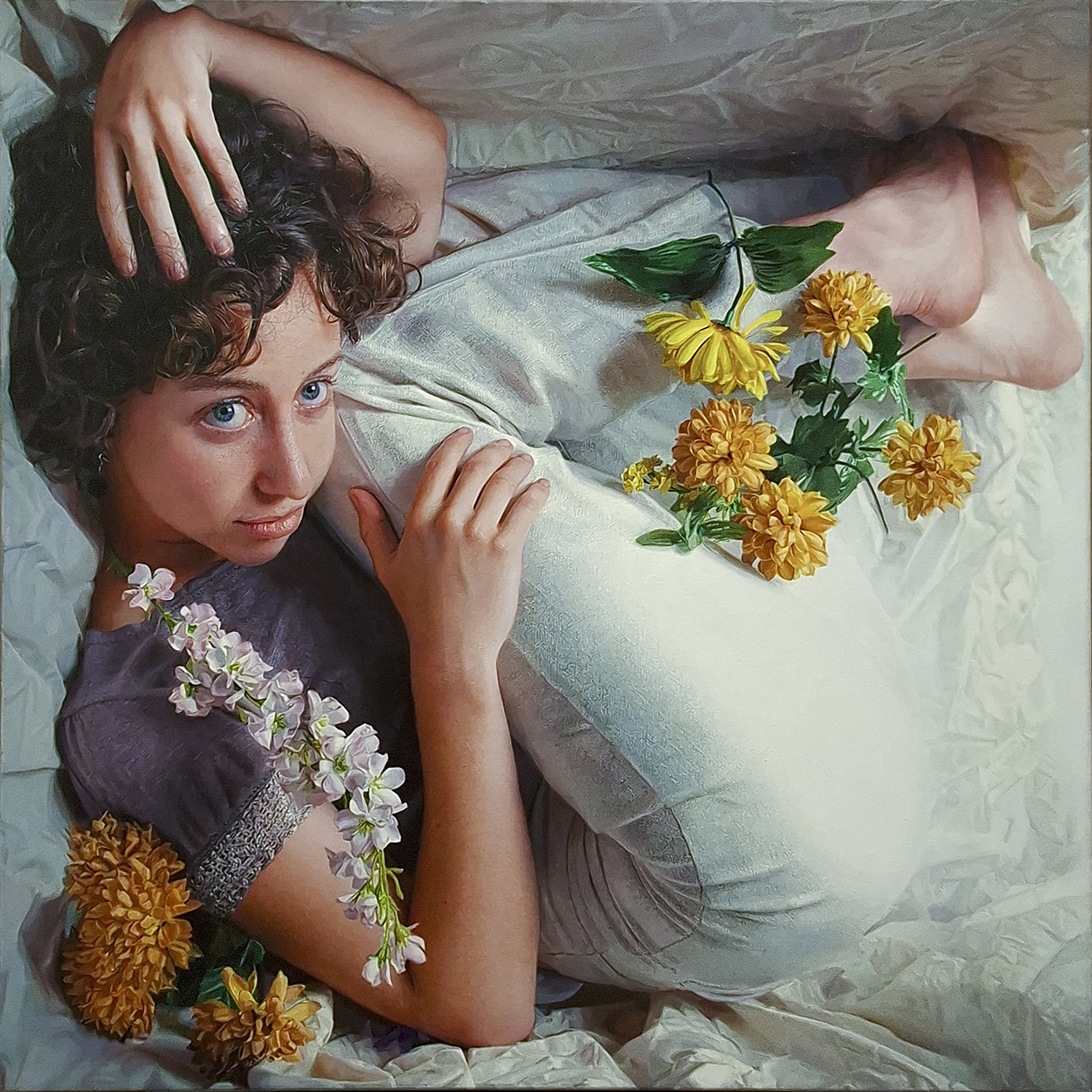
Sebastián Mesa is a contemporary painter based in Buenos Aires. He studied illustration at the Martín Malharro School of Visual Arts in Mar del Plata and later taught drawing and painting at the National University of San Martín until 2018.
Mesa’s work centers on emotion as a universal language, using the human figure—often the female form—to explore themes of identity, vulnerability, and shared experience. His paintings are introspective in nature, inviting viewers to see themselves reflected in the image and to connect with feelings that transcend language and cultural boundaries.
THE ECONOMIC CANVAS
I continue to be perplexed by the seemingly irrational movements of the stock market… April shook off a turbulent close to the first quarter of the year and did so in impressive fashion. I’m talking record highs that appear to fly in the face of all logic and reason.
We saw a moderate correction in March, followed by a swift recovery, all within a few weeks. In that time, traffic has been halted in one of the world’s busiest trade routes, and there’s no resolution in sight for the ongoing conflict with Iran. Yet somehow, the Nasdaq turned in an eye-popping 15.3% return on the month! The S&P and Dow also had strong showings, up 10% and 7%, respectively. And that makes this all the more curious… usually markets sell when faced with uncertainty. While it is nice to see record highs, it raises questions about what is driving this support. From a technical standpoint, the numbers don’t lie… companies continue to beat Wall Street expectations, and that is bound to put upward pressure on stocks.
With seemingly good news in the equity markets, the US Dollar showed some weakness… both the Pound and Euro strengthened against the Dollar, gaining 2.2% and 1.5%, respectively. More broadly, the DXY or US Dollar Index, which measures the value of the Dollar against a basket of 6 other major currencies, saw a notable 1.8% drop this month. That segues into a pretty significant concern… historically, the DXY has had a positive correlation with the Petrodollar. Just so we’re all on the same page, back in the 1970s, a system was established that solidified the dollar as the primary global reserve currency. As such, oil is traded around the world in US Dollars (or Petrodollars), which provides broad support for our currency. But we have seen that system begin to break down… usually, when oil prices are up, the DXY goes up. But in April, the DXY was down while Crude futures remained stubbornly elevated. WTI Crude was up nearly 6%, while Brent Crude was up nearly 10%, and notched a four-year high when it topped $126 at one point. Support for gold has also waned a bit… compared to a month ago, gold futures are trading roughly 3% lower.
The Crypto kids had a nice showing… Bitcoin jumped about 15% in the past month and is now flirting with $80K – a welcome sight after its fall from grace that started last October. Ethereum turned in an 8% gain, while Litecoin was up about 4%... so they were all up across the board – that includes XRP (XRP), Solana (SOL), TRON (TRX), and even Dogecoin (DOGE)!
Look, as long as companies can continue to see growth, we will see higher stock prices, even if there are energy price and inflationary headwinds. But the longer we’re involved in this conflict, and the longer trade disruptions drag on, the more ripple effects we will see spread through our global economy. While the past few weeks have felt like smooth sailing, it is important to remember the winds can change quickly.
THE ART MARKET
AT AUCTION
SOTHEBY’S LONDON OLD MASTERS & 19TH CENTURY PAINTINGS
On Wednesday, April 15th, Sotheby’s London hosted their Old Master & Nineteenth-Century Paintings sale. Though hosted entirely online, the auction garnered substantial attention, which has unfortunately become a bit of a rarity in the markets for these works.
Of course, the expected stars of the sale were a pair of paintings by the great nineteenth-century seascape painter Ivan Aivazovsky. Aivazovsky’s life and work have been the subject of discussion due to his complex identity. He was ethnically Armenian but was born and lived in Ukraine, which was part of the Russian Empire at the time. Though considered unambiguously Russian for decades, the Russian invasion of Ukraine has led to more widespread recognition of Ukraine’s national identity as distinct. Therefore, some artists long considered Russian have been hailed as symbols of Ukrainian culture. Aivazovsky, spending most of his life in Crimea, has been an example of this. But the auction’s top lot, Turks Conversing by the Black Sea at Sunset, is not exemplary of the artist’s well-known work. Rather than enormous ocean swells and port cities, here the artist puts the water in the background. Instead, he gives us a genre painting. Aivazovsky shows several figures in Turkish dress standing together on a roof while a pair of women look out over the Black Sea from the structure’s humble portico. The painting is not as meticulously detailed as the artist’s other work, and there are some apparent condition issues. Regardless, given Aivazovsky’s popularity, Sotheby’s gave the painting an estimate range of £60K to £80K. Despite the issues, bidding on the painting sent the price soaring. When the time ran out, the final bid was £240K (or £307.2K / $416.3K w/p), exactly three times the high estimate.
Something similar happened to the other Aivazovsky painting available on Wednesday, titled Troika at Sunset. The artist was known for his portrayal of skies, given their importance in maritime art. He often used the sun or moon to showcase his abilities at rendering light and color, as well as to provide a counterbalance in the upper half of a painting. Although he does not use the sea as a subject in Troika at Sunset, Aivazovsky does the same here. Troika is a Russian word meaning a trio of any kind, but in this case, it refers to a carriage pulled by three horses. The carriage speeds towards the horizon as the sun’s orange glow is diffused through several layers of clouds and haze. It’s a relatively small painting, measuring just over 9 by 12 inches, so Sotheby’s expected it to sell for no more than £60K. But yet again, bidding continued until the timer ran out at £160K (or £204.8K / $277.5K w/p), or 2.7 times the high estimate.
And finally, a rather unusual work by the eighteenth-century German-born British artist John Eckstein the Younger. The artist is mainly known as a portrait and genre painter, making the present painting rather strange. Titled The Vices of the Day, the work offered at Sotheby’s seems more like an allegorical painting showing the different types of sin and social failings in the 1780s. These include slavery, poverty, murder, torture, public executions, drunkenness, gambling, dueling, war, and several others. It’s not exactly a salon piece. It’s closer to William Hogarth than Joshua Reynolds. This is likely why Sotheby’s did not expect it to sell for more than £8K. However, it is such a unique painting, something completely unheard of for someone exhibiting at the Royal Academy. This was likely the reason why buyers became interested, driving up the final price to £70K (or £89.6K / $121.4K w/p). Eckstein’s work is rather rare at auction, none of it selling in excess of £10K, making the sale of The Vices of the Day rather exciting.
Twenty of the one hundred seventy-five available lots sold for more than double their high estimates. Four lots sold for more than five times their estimates. The Eckstein was quite the surprise, yet there was one even bigger on Wednesday. A relatively small study of clouds was estimated to sell at Sotheby’s for between £4K and £6K. Measuring barely more than 9 by 14 inches, the painting by an unknown eighteenth-century British artist shows only a thin band of solid earth along the bottom, with a small farmhouse and windmill as the only interruptions to the horizon. It is in rather poor condition cosmetically, with plenty of surface dirt and yellowed varnish. However, Sotheby’s states on the lot’s webpage that it “would benefit from sensitive conservation.” Inexplicably, the study proved popular with online bidders, and as the auction timer ran out, the painting sold for 10 times its initial high estimate: £60K (or £76.8K / $104.1K w/p).
Of the one hundred seventy-five lots available on Wednesday, twenty-eight sold within their estimates, giving Sotheby’s a 16% accuracy rate. A plurality of lots, seventy-two in total (41%), sold below their estimates. This leaves forty-five lots (26%) selling above the estimate. With thirty lots going unsold, Sotheby’s achieved an 83% sell-through rate. In this case, we saw something that, unfortunately, has become rare in the realm of Old Master and nineteenth-century painting sales. An auction that did exceptionally well, at least in terms of estimates versus total hammer price. Sotheby’s anticipated the entire auction to bring in a total of £1,801,700 at most. Given the success of the Aivazovsky paintings and several other lots, the total came to rest just slightly above that, at £1,805,000. With fees, this comes out to £2.3 million, or $4.1 million.
BEYOND THE FRAME
EXHIBITIONS, DISCOVERIES, AND CULTURAL COMMENTARY
VENICE BIENNALE TAKES FLAK OVER RUSSIAN INCLUSION
Criticism of the Venice Biennale has increased in recent weeks for its refusal to ban Russia from participating. And now, the government of Finland plans to minimize its presence at the event in response.
Organizations such as the Art Not Genocide Alliance (ANGA) have called for several states to be banned from participating in the Biennale, with the United States, Russia, and Israel being the three mentioned by name. The group has made a more general demand for the event to exclude “current regimes committing war crimes”. ANGA has started a petition signed by over seventy artists. Three of the five Biennale curators for the event’s main exhibition have also signed the petition. While the Biennale has not specifically commented on the petition, it has previously defended itself by stating that it forbids participation in “exclusion or censorship in culture and art.”
Following Russia’s invasion of Ukraine in February 2022, the Biennale stated that it would not collaborate with any actor that played a part in the beginning of the conflict. Russia was therefore banned from participating for two editions. Despite the conflict not yet ending, Russia has been invited back to its pavilion. The governments of twenty-one European Union member states, as well as the Ukrainian government, signed a joint letter protesting against this move. Furthermore, a letter from the European Commission published in the Italian newspaper La Repubblica claims that, by accepting a Russian delegation this year, the Biennale has violated European Union sanctions against Russia. The EC has now threatened to withdraw the €2 million in funding it promised for the 2028 edition unless the organizers reverse their decision.
Ukraine will have its own pavilion during the Biennale. The featured artist, Zhanna Kadyrova, has stated that the pavilion will not be used to protest Russia’s inclusion in the event.
Finland was one of the signatories to the joint letter. But they are the first country to announce steps taken to distance itself from the Biennale. Mari-Leena Talvitie, the Minister of Science and Culture, announced that none of the country’s political leadership will visit during the Biennale. Russia’s inclusion was named as the reason for this move, stating that “[Russian] participation must not be permitted as long as Russia’s war of aggression in Ukraine continues.” However, Talvitie stated that while no elected officials or national representatives will attend, Finland will still have a pavilion for the sake of “promoting Finnish art and cultural expression”.
The Biennale has responded to these criticisms by making a compromise. Russia and Israel may be present, but they will be barred from receiving the Golden Lion and Silver Lion prizes. Though these countries were not named specifically, the event announced that these awards will not be given to any country with a leader currently wanted by the International Criminal Court. The Russian Pavilion will also be open only for previews rather than the full length of the Biennale. While this is a suitable arrangement for some, others remain unsatisfied.Supreme Court Ends AI Art Legal Battle.
€1M PICASSO GIVEN AWAY IN CHARITY RAFFLE
On Tuesday, April 14th, a French man learned he had won a €1 million Picasso painting in a raffle.
The 1 Picasso 100 Euros raffle is an event put on by the Picasso Estate in collaboration with a prominent charity. This year, it was the Fondation Recherche Alzheimer, one of the most prominent private Alzheimer’s charities in France. This is now the third time such an event has been put on, the first being in 2013. This year, they sold 120,000 tickets worldwide. At €100 each, the raffle raised €12 million for Alzheimer’s research. This year, the raffle prize was a gouache painting on paper by Pablo Picasso. The painting, created in 1941, is a portrait of Picasso’s partner Dora Maar. The painting was contributed to the raffle by the London-based Opera Gallery, and the drawing was conducted at Christie’s Paris. The gallery originally intended to sell the painting for €1.45 million, but decided to accept a lower price from the raffle contributions since it was for a charitable cause.
The 1 Picasso 100 Euros raffle was initially developed by the French television host Péri Cochin. In 2013, she organized the event in which the Picasso Estate partnered with the International Association to Save Tyre. The raffle raised €4.8 million to help restore the ancient Lebanese city, which is a UNESCO World Heritage Site. That year, the 1914 gouache painting Man with an Opera Hat went to a 25-year-old man from Pennsylvania. For the next raffle in 2020, the charity CARE International was chosen. The €5.1 million raised went to build and maintain wells and promote hygiene initiatives in villages in Cameroon, Madagascar, and Morocco. That year, an Italian accountant won the 1921 oil painting Still Life after her son bought her a ticket as a gift.
2026 saw a marked increase in raffle ticket sales compared to previous iterations. The 2020 raffle sold only around 50,000 tickets. This year’s winner was a French engineer named Ari Hodara. At the drawing, Christie’s video called him to tell him the good news. “How do I know this isn’t a prank?” he responded. Hodara has stated his intention to keep the painting for himself rather than sell it. Citing the artist’s generosity, Picasso’s grandson, Olivier, called the raffle “an absolutely logical and legitimate part of his legacy.”
RESTELLINI’S MODIGLIANI CATALOGUE COMPLETE
After close to thirty years of work, art historian Marc Restellini’s monumental catalogue raisonné on Amadeo Modigliani is now set for publication.
Restellini is considered one of the art world’s most renowned specialists on Modigliani’s life and work. Since the 1990s, he has been working on a new catalogue raisonné, something which has been in great demand for quite some time. Ambrogio Ceroni published the most widely regarded Modigliani catalogue, last updated in 1972. Other catalogues by Osvaldo Patani and Christian Parisot have been released since then, but the Ceroni remains the benchmark. However, as scholarship on Modigliani has advanced, it has become increasingly apparent that Ceroni’s catalogue has some gaps. Since its publication, it has gone from a definitive work to better than nothing at all.
Restellini first embarked on the project at the recommendation of French art dealer Daniel Wildenstein. The Wildenstein Institute initially provided much of the funding for Restellini to perform his research. But in 2015, he formed his own organization, the Institut Restellini, through which he provides authentications.
Restellini and his team compiled the catalogue by recognizing the three steps needed to provide authentication. The first is documentary evidence, then stylistic analysis, and then finally scientific testing. To establish the standard against which all other work would be compared, Restellini’s team started with the collections of Jonas Netter and Paul Alexandre, who bought paintings directly from the artist while he was still alive. Through this process, the new catalogue has expanded from the 337 paintings in Ceroni’s work to 421 works. Restellini does acknowledge, however, that he excluded fifteen paintings that were previously featured in the Ceroni catalogue. This is either because the research team had doubts about the work’s authenticity or because they were unable to access the painting for analysis. A notable exclusion from the catalogue was Portrait of Beatrice Hastings Seated, created in 1915. Restellini claims that, while certainly painted by Modigliani, the painting was altered at some point between 1957 and its sale at Christie’s in 1997, likely due to heavy restoration. He therefore concluded that the changes caused it to lose its status as an original work by Modigliani.
A painting’s exclusion is not a definitive declaration that the work is a forgery. But fakes have been a consistent problem for Modigliani specialists and collectors. The artist died in 1920 at the age of 35 from tuberculosis. He left virtually no records or documents, and no central authority or foundation was established to manage his estate or provide authentications. Forgers such as Elmyr de Hory were therefore able to create works in the artist’s style with minimal resistance. Restellini has reportedly received death threats for his refusal to authenticate certain paintings. He also got into a bit of legal trouble with the Wildenstein family. In 2017, the France-based Wildenstein Institute transferred its archives to the Wildenstein Plattner Institute (WPI), its U.S.-based offshoot founded by Daniel Wildenstein’s son Guy. Consequently, in 2020, Restellini sued the WPI for allegedly keeping him from accessing his research materials. Though a New York judge eventually dismissed the WPI’s counterclaim, the suit was later settled out of court.
Next year, Restellini plans to organize an exhibition of Modigliani paintings that are absent from the Ceroni catalogue yet present in his. His Modigliani catalogue raisonné is available for pre-order, with the official release date set for May 16th. Pace Gallery in New York also plans on hosting a symposium called From Myth to Method: Reimagining the Catalogue Raisonné, Inside Restellini’s Modigliani. The catalogue, a six-volume set priced at $2,500, is being published by Yale University Press. Restellini says his next project will focus on Modigliani’s drawings.
GREECE PROPOSES NEW ART FORGERY LAWS
The government of Greece may enact new laws concerning art forgery.
While most countries, particularly in Europe, address art forgery through general anti-forgery laws, Greece may become one of the few countries to dedicate legislation and state infrastructure specifically to targeting art forgery and art destruction. A new bill, introduced in Greece’s parliament in January, creates a new system of penalties for the creation, trade, and possession of forgeries. Fines and jail time would be made proportional to the damage caused by the perpetrators, financial or otherwise, and the overall severity of the fraud. The minimum penalty in the bill would be six months in jail and a fine of €5,000. However, at the top of this scale is a ten-year jail sentence and a fine of €300,000. These harsher penalties would be imposed only when aggravating circumstances are present, such as repeated fraud or abuse of position or reputation to facilitate the creation or distribution of forgeries.
The bill also extends these penalties not only to forgery but also to the destruction of existing works. Many commentators have referenced the March 2025 incident in which Nikolaos Papadopoulos, a member of parliament, entered the National Gallery in Athens and defaced four works he claimed were offensive to Greek Orthodox Christianity.
The proposed law would also establish a separate department within Greece’s culture ministry to maintain a database of experts and appraisers deemed credible. This would replace the current system, in which courts appoint specialists to provide testimony in specific cases. This department would also maintain a catalogue of known forgeries to aid art experts and law enforcement in tracing fakes and ensuring they do not easily circulate through the art market. Some have also commented that Greece’s broader anti-forgery legislation requires proof of a financial transaction to establish that a crime occurred. The new bill, however, dispenses with this, requiring only proof that a forgery was created. In recent years, an increasing number of art sales have taken place completely online. While this has enabled substantial growth in the art market, it has also led to a steep rise in forgeries. In the past few years, European law enforcement agencies have had to bust several enormous forgery rings responsible for creating and distributing hundreds of fake artworks. Notable incidents include 38 people arrested in Italy in 2024, while Spanish authorities confiscated a number of purported Old Master paintings in 2023.
While this legislation seems necessary, some have reservations. Achilleas Tsantilis, president of the Hellenic Association of Art Experts, stated that the ministry of culture may not be in the position “to support such a specialized authentication mechanism”. Tsantilis and others have stated that the current legislation and enforcement structures are sufficient to address the scale and severity of art forgery in Greece today. But one must admit that increasing the penalties for forgery and lowering the threshold for what constitutes a crime in these cases would certainly provide a strong deterrent to those interested in entering such a criminal enterprise.
MEXICAN ART WORLD OPPOSES KAHLO & RIVERA WORKS LEAVING FOR SPAIN
Mexico’s cultural sector is protesting against an agreement that would move an important Mexican art collection, featuring several works by Frida Kahlo and Diego Rivera, to a cultural center in Spain. Some say the move is temporary, but many are skeptical.
The Gelman collection consists of around three hundred works of Mexican art previously owned by the Russian-born Mexican film producer Jacques Gelman and his wife, Natasha. Jacques became well-known in the Mexican film industry, most notably for producing the films of the renowned Mexican comic actor Cantinflas. The Gelmans were also great art patrons, forming relationships with artists like Frida Kahlo and Diego Rivera, with the latter painting Natasha’s portrait in 1943. Important works by Kahlo in their collection include Self-Portrait with Monkeys and Diego on My Mind. They also collected works by other prominent Mexican artists, including José Clemente Orozco, Rufino Tamayo, David Alfaro Siqueiros, and others. Additionally, they amassed a collection of Mexican photography, including works by Kahlo’s father, Guillermo.
In 2023, the Zambrano family, owners of the Mexican building materials company Cemex, purchased the collection. Recently, the family secured a deal with the Spanish bank Santander for one hundred sixty of the collection’s works to be managed by the bank’s new cultural center, the Faro Santander, located in the northern Spanish region of Cantabria. This arrangement has prompted a strong response from Mexico’s cultural sector, as the fear exists that many works, which the Mexican government is legally required to protect, may leave the country permanently. Since 1984, Mexican cultural law has recognized the entire creative output of Frida Kahlo as an “artistic monument”. Rivera and Orozco’s work has been similarly recognized as such since 1959. The decree giving Kahlo’s work this particular status includes the added protection that the National Institute of Fine Arts & Literature (INBAL) is therefore required to ensure that any of her works are only permitted to leave Mexico temporarily. However, based on what has been said about the agreement with Santander, the Gelman collection may be exhibited in Spain for a longer period than is legally permitted.
Concerned Mexican cultural workers have attached their names to an open letter opposing the Gelman collection’s move to Spain. The letter states that “the Ministry of Culture and INBAL have maintained a lack of transparency regarding the agreement”. The letter highlights that Santander may intend for the works to remain in Spain more or less permanently. The director of Faro Santander, Daniel Vega Pérez, was quoted in the Spanish newspaper El País in January, describing the cultural law that protects the artists’ work as “flexible”. He further said that INBAL can grant extensions to the export licenses it issues, and that the Gelman collection would be a “permanent but dynamic presence” at the new institution. The letter further states, “The citizens of this country have the right to be fully informed about the reasons that have led these authorities to allow the indefinite removal of eleven Kahlo canvases from the country”. The signatories claim that INBAL “has failed to fulfill its mandate” and they call upon the organization to “rectify this unfortunate situation by complying with and enforcing the legislation”. By the end of March 2026, the letter had nearly four hundred signatures.
At a press conference on March 26th, Mexico’s president, Claudia Sheinbaum, stated, speaking on behalf of herself and her culture minister, Claudia Curiel de Icaza, that “we wish for [the collection] to remain in Mexico”. Curiel de Icaza also stated that the collection would return to Mexico by 2028.
REINA SOFIA REFUSES TO LOAN PICASSO’S GUERNICA
Pablo Picasso’s masterpiece Guernica is at the center of a cultural fight in Spain after the Reina Sofía Museum refused to loan it to the Museo Guggenheim Bilbao. The regional government of the Basque Country has submitted a petition to the Ministry of Culture to approve the painting’s temporary transfer to the Guggenheim in honor of the ninetieth anniversary of the Guernica bombing, the event that inspired Picasso to create the painting.
The question of where the painting should be exhibited has a long history. After General Francisco Franco’s victory in the Spanish Civil War in 1939, Picasso had the painting moved to the United States. He entrusted it to the care of the Museum of Modern Art in New York, but the work was temporarily loaned to many American and international institutions. In his lifetime and in his will, Picasso stipulated that Guernica should not be exhibited in Spain unless democracy had been restored to the country. Picasso passed away in 1973, with Franco outliving him only by two years. Following Franco’s death, Spain underwent a transition from an authoritarian dictatorship to a democratic constitutional monarchy, culminating in the adoption of a new constitution in 1978.
MoMA agreed to relinquish its control of the painting in 1981. There was some initial resistance for several reasons. Firstly, the museum was not entirely ready to part with one of its collection highlights. But furthermore, some believed that a constitutional monarchy was not what Picasso had in mind when he spoke of the restoration of democracy. Rather, he meant the restoration of a republic, like the one that existed before the Spanish Civil War. Guernica was moved to the Prado Museum, where Picasso wanted it displayed. Over a million people visited the Prado to see Guernica within a year of its return. In 1992, the painting was moved again, this time to the brand new Reina Sofía Museum, which had a gallery purpose-built for the work. The Reina Sofía was and continues to be the country’s national collection of twentieth-century art.
Since the painting’s return to the country, Basque nationalists have proposed that Guernica be loaned or permanently moved to a museum in the Basque Country. These proposals have been bolstered since the 1997 establishment of the Guggenheim Bilbao, which has become the third-most-visited museum in the country, just slightly behind the Reina Sofía.
Of course, it is evident why Basque politicians wish to keep the painting in a Basque cultural institution. The town of Guernica lies twenty kilometers east of Bilbao. In an attempt to aid Franco during the civil war, the Nazi German and Italian fascist air forces bombed the town, killing several hundred civilians. The incident was not only exemplary of fascist violence and disregard for human life, but it is also a significant part of the Basque people’s history of subjugation.
The central Spanish government, both during the monarchy and under Franco, attempted modern state-building by encouraging the formation of a single, cohesive national identity. In doing so, some of the most distinct aspects of regional Spanish cultures were actively suppressed. In terms of language, Castilian was held up as the only legitimate form of Spanish. The use of other Spanish languages, such as Catalan, Galician, and, importantly, Basque, was suppressed. Franco in particular adopted a strict language policy, forbidding these regional languages in both the administration and the school system. Even giving one’s child a name from these languages was discouraged. Slogans such as “If you are Spanish, speak Spanish!” became particularly popular among Francoists to help shift social norms surrounding language. The bombing of Guernica was therefore significant not only in the context of the Spanish Civil War but also of the Basque struggle for autonomy.
Specialists at the Reina Sofía have said they oppose moving the painting, mainly because of its condition. They have stated that the work is “particularly susceptible” to damage, including “new cracks, lifting and detachment of the paint layer, as well as tears in the support”. To avoid such damage, they recommend keeping the painting at the Reina Sofía, where its condition is stabilized thanks to “rigorous environmental controls”.
Spain’s prime minister, Pedro Sánchez, could intervene on this issue in favor of loaning Guernica to the Guggenheim. This would certainly score him points with the members of the two main Basque political parties represented in Spain’s Parliament, whose support he needs to maintain his governing coalition. Sánchez, however, has previously deferred to his culture ministry when the Basque autonomous government has made similar requests.
Thank you for following along with our Comments on the Art Market. Stay tuned for more art news, discoveries, and gallery highlights in next month’s newsletter.
The Rehs Family © Rehs Galleries, Inc., New York – May 2026